


Most “Market Analysis” Is Just Data Collection
Ask ten companies how they analyze markets, and you will almost always hear structured, confident answers that sound convincing on the surface: competitor research, dashboards, keyword analysis, industry reports. Yet when you look closer at how these processes influence real decisions, it becomes clear that in many cases this work remains descriptive rather than actionable, accumulating information without transforming it into a clear direction for growth.
Real market analysis is not about collecting more data points or expanding dashboards indefinitely. It is about understanding which signals matter, which are misleading, and which are early indicators of change that have not yet fully surfaced in aggregated metrics. The difference between teams that grow and teams that stagnate is rarely access to data. It is the ability to interpret fragmented signals and translate them into decisions under uncertainty.
At ScaleTogether, we treat market analysis as a structured decision system rather than a research exercise. The purpose is not to describe the market in detail, but to identify where growth is actually emerging, where it is constrained, and what mechanisms are shaping that dynamic beneath the surface.
Step 1: Defining the Real Market (Not the Obvious One)
The first and often most critical mistake in market analysis happens before any data is collected. Companies define the market incorrectly, usually by relying on broad categories such as “fintech” or “ecommerce,” or by narrowing the scope too aggressively to a set of direct competitors. Both approaches fail because they do not reflect how demand actually behaves.
Instead of starting with industry labels, we reconstruct the market through behavioral and structural lenses. This means identifying clusters of demand based on what users are trying to achieve, mapping how different segments approach the same problem, and understanding which players influence decisions at different stages of the journey, not just those who compete directly at the point of sale.
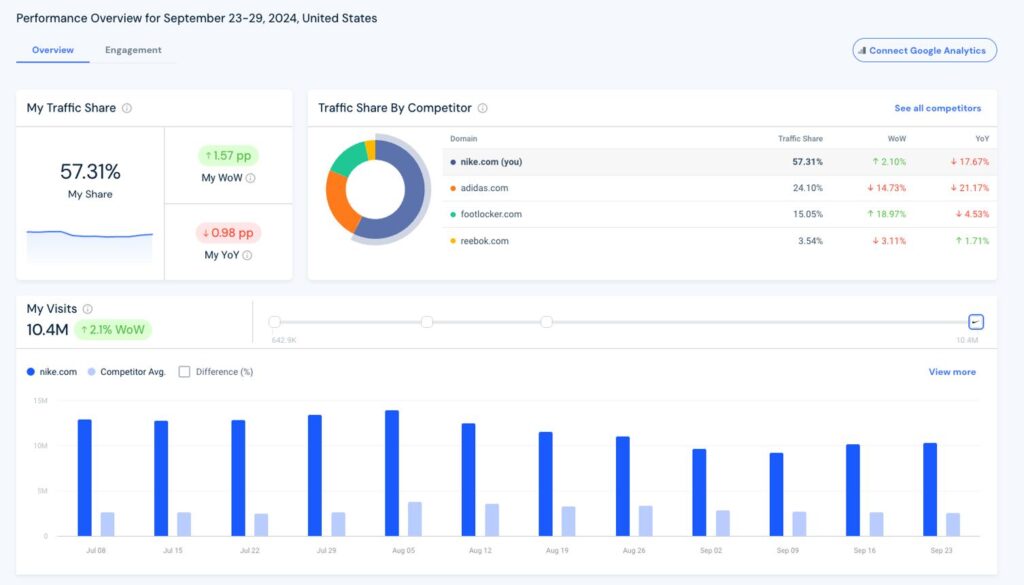
To do this, we rely on tools such as SimilarWeb and SEMrush, not as definitive sources of truth, but as instruments that reveal patterns in traffic distribution, audience overlap, and acquisition channels. These patterns help us understand how attention flows across the market and where competitive pressure is concentrated, which is often very different from how companies internally define their competitive set.
Step 2: Understanding Demand — Not Just Volume
A common simplification in market analysis is equating demand with search volume. While volume provides a rough indication of interest, it does not capture the underlying structure of intent, the stage of decision-making, or the speed at which demand is evolving. Relying on volume alone often leads to overinvestment in saturated areas while ignoring emerging opportunities that have not yet scaled.
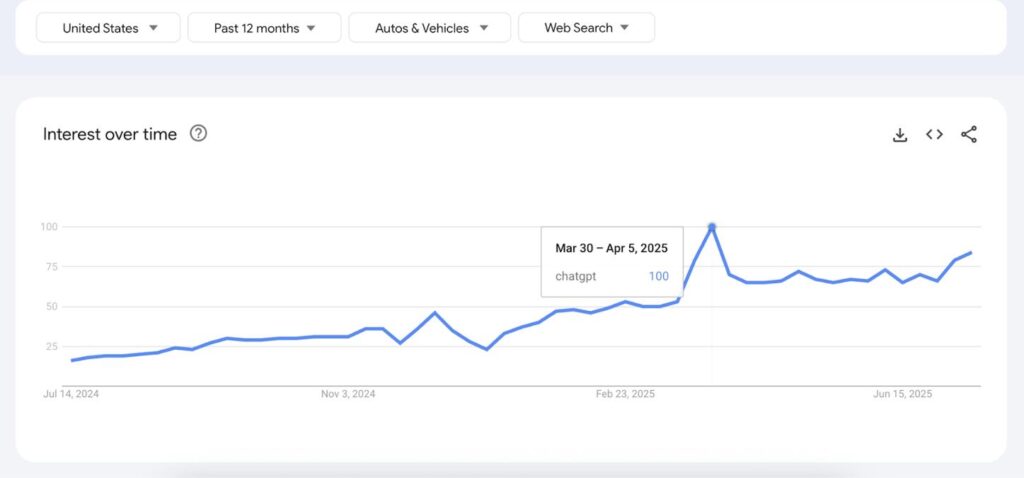
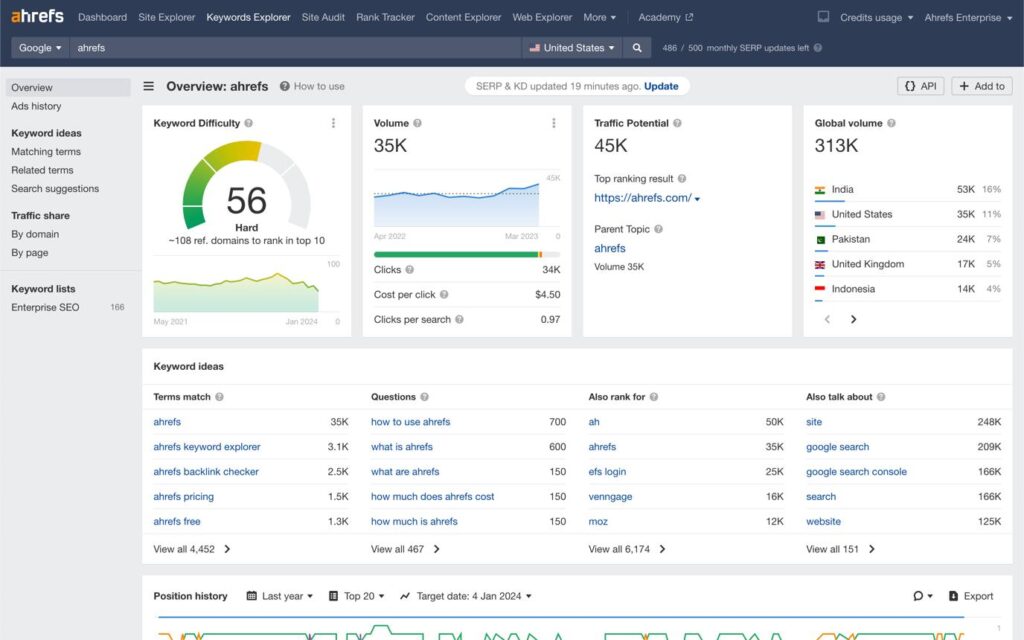
We approach demand as a multi-dimensional signal. This includes analyzing how search patterns change over time, distinguishing between problem-oriented and solution-oriented queries, and examining how search engine results pages are structured, since they reflect how platforms interpret user intent at scale. The composition of a results page—whether it is dominated by ads, comparison content, or informational resources—often reveals more about demand maturity than raw volume numbers.
Tools such as Google Trends and Ahrefs are particularly useful here because they allow us to observe directional changes rather than static snapshots. Rising low-volume queries, for example, frequently indicate early-stage shifts in user behavior that are not yet visible in mainstream datasets but can become major growth drivers over time.
Step 3: Mapping the Real Competitive Landscape
Traditional competitor analysis tends to produce lists rather than insight. Knowing who operates in a market does not explain how they win, where they are vulnerable, or which parts of the funnel they dominate. Without that level of understanding, analysis remains descriptive and does not translate into strategic advantage.
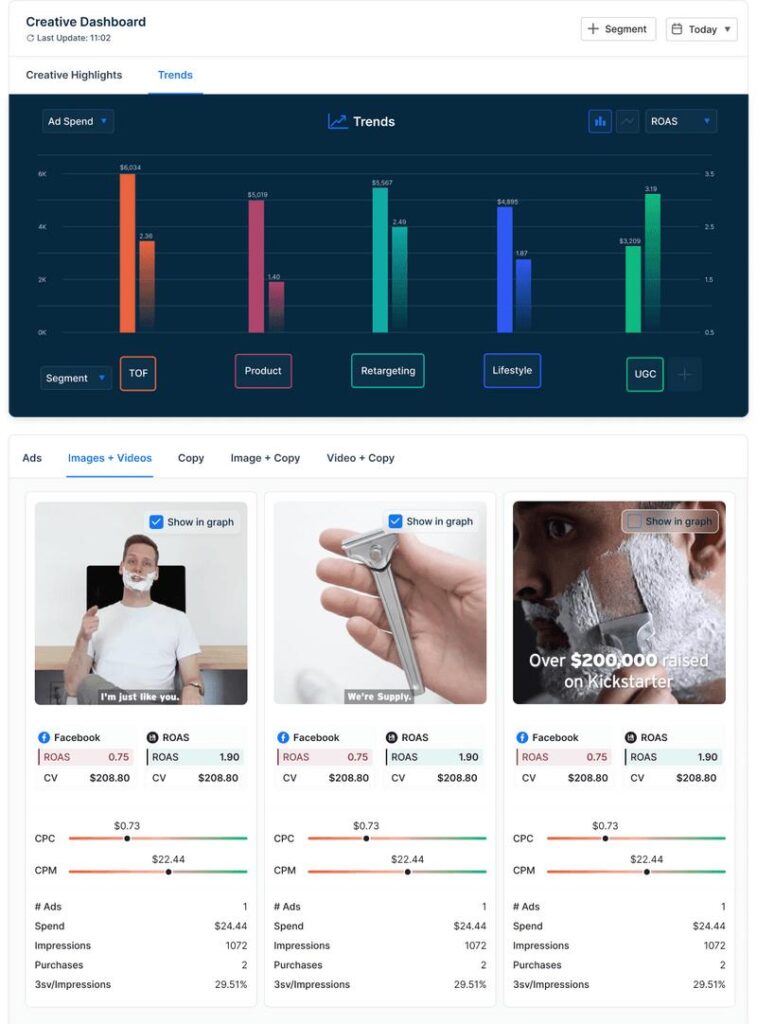
We deconstruct competition into functional layers, focusing on how demand is captured, how it is created, and how it is converted. This requires moving beyond static company profiles and examining active behavior in the market, particularly in paid channels where strategies are continuously tested and updated.
Platforms such as Meta Ads Library and Google Ads Transparency Center allow us to observe live advertising activity, including creative formats, messaging angles, and positioning strategies. This provides a dynamic view of competition, showing not only what competitors claim, but what they are actually investing in and testing at scale.
Step 4: Identifying Gaps — Where Growth Actually Exists
Markets rarely lack competition; they lack clarity in specific areas. The goal is not to find empty spaces, which are increasingly rare, but to identify structural gaps where existing solutions fail to fully meet user expectations. These gaps can appear in different forms, including unmet demand, unclear positioning, or friction within the customer experience.
We analyze these gaps by combining quantitative signals with qualitative observation. Funnel data helps identify where users drop off, behavioral analytics reveals how they interact with products and content, and direct product experience highlights inconsistencies that are not visible in aggregated metrics. This layered approach allows us to move beyond surface-level insights and understand why certain opportunities exist.
Growth, in this context, does not come from replicating what competitors already do well. It comes from identifying patterns of failure that are repeated across the market and positioning around them in a way that is both visible and meaningful to users.
Step 5: Turning Analysis Into Strategy
The final stage is where most market analysis loses its value. Insights are documented, presentations are created, but the connection to actual decisions remains weak or indirect. This gap between analysis and execution is not a lack of information, but a lack of structure in how that information is translated into action.
We approach this stage by organizing outputs around decisions rather than observations. Instead of summarizing findings, we define clear implications for budget allocation, segment prioritization, messaging direction, and areas that should be intentionally deprioritized. This creates a direct link between analysis and execution, ensuring that insights are not only understood but operationalized.
The objective is not to eliminate uncertainty, which is impossible in dynamic markets, but to reduce it to a level where decisions can be made with confidence and adjusted as new data emerges.
Conclusion: Market Analysis Is a Decision System, Not a Report
Market analysis does not create value by increasing the volume of information available to a team. It creates value by structuring that information in a way that clarifies where to act and why. Without that structure, even the most detailed analysis remains disconnected from growth.
In practice, this means shifting the focus from describing the market to understanding its dynamics, from tracking competitors to identifying how they operate, and from collecting data to interpreting it within a broader context. The teams that succeed are not those with the most data, but those that can consistently turn incomplete and imperfect information into effective decisions.
What This Means in Practice — And Where We Come In
If your current approach to market analysis results in reports that are informative but do not clearly influence strategic direction, the issue is not a lack of tools or data. It is the absence of a system that connects signals to decisions in a structured way.
At ScaleTogether, we design that system. We define how markets are mapped, how demand is interpreted, how competition is analyzed, and how all of these inputs translate into concrete actions that support growth. The goal is not simply to understand the market more deeply, but to move within it more effectively, making decisions that are grounded in data but not constrained by its limitations.