


Why Scalable Systems Often Break the Very Relationships They Were Meant to Grow
The Hidden Trade-Off Behind Efficiency
Automation was supposed to solve one problem: scale.
And it did. Marketing teams today can reach more users, process more data, and execute more campaigns than ever before. Workflows that once required entire departments are now handled by platforms, integrations, and AI-driven systems operating in real time.
But something else happened quietly in parallel.
As systems became more efficient, customer interactions became more abstract. Touchpoints multiplied, but meaning diminished. Messages were delivered faster, more consistently, and at higher volumes — yet felt increasingly generic, predictable, and disconnected from actual human context.
This is the paradox of modern marketing:
The more automated your system becomes, the easier it is to lose the person inside it.
Automation Doesn’t Break Relationships — It Standardizes Them
At its core, automation is built on pattern recognition.
Platforms like HubSpot, Salesforce, and marketing tools across the ecosystem rely on segmentation, behavioral triggers, and predefined logic. Users are grouped, labeled, scored, and routed through flows designed to maximize efficiency.
This works — up to a point.
The problem emerges when patterns replace perception.
Instead of responding to real-time human nuance, systems respond to categories:
- “user abandoned cart”
- “lead is warm”
- “customer is high-value”
And while these labels are operationally useful, they are inherently reductive. They compress complex human behavior into simplified signals that can be automated — but not fully understood.
What Automation Optimizes — And What It Ignores
| System Optimizes | System Often Ignores |
|---|---|
| Speed | Context |
| Consistency | Emotional nuance |
| Scale | Individual perception |
| Efficiency | Relationship depth |
Automation increases output – it does not guarantee relevance.
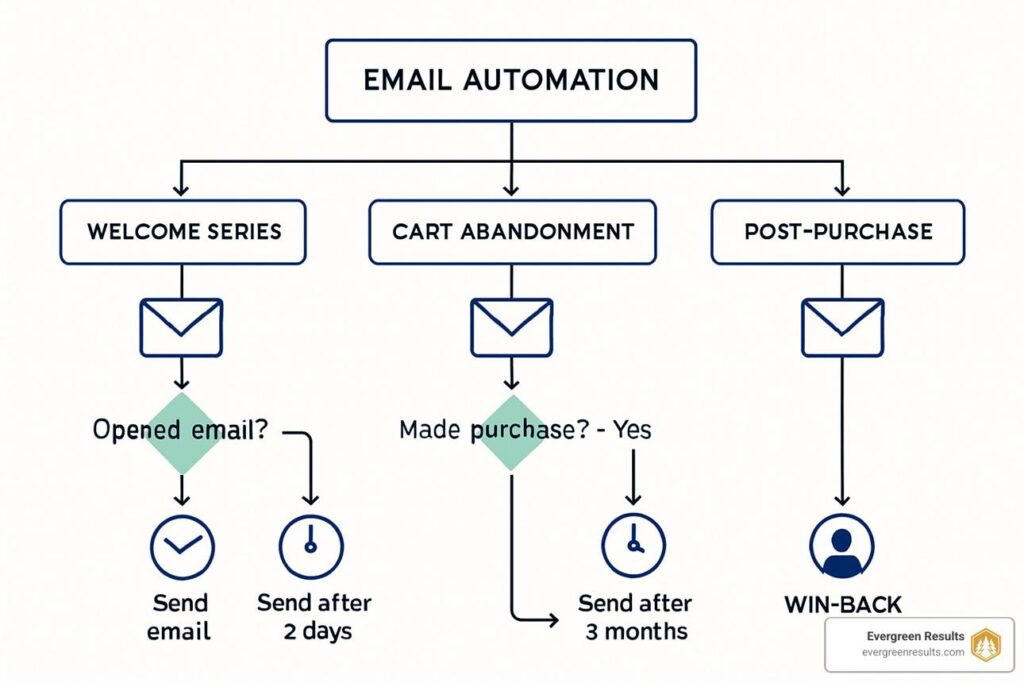
An example of simple email personalization based on the automation of actions of a specific user (what is called personalization, but is in fact only an illusion):
The Illusion of Personalization
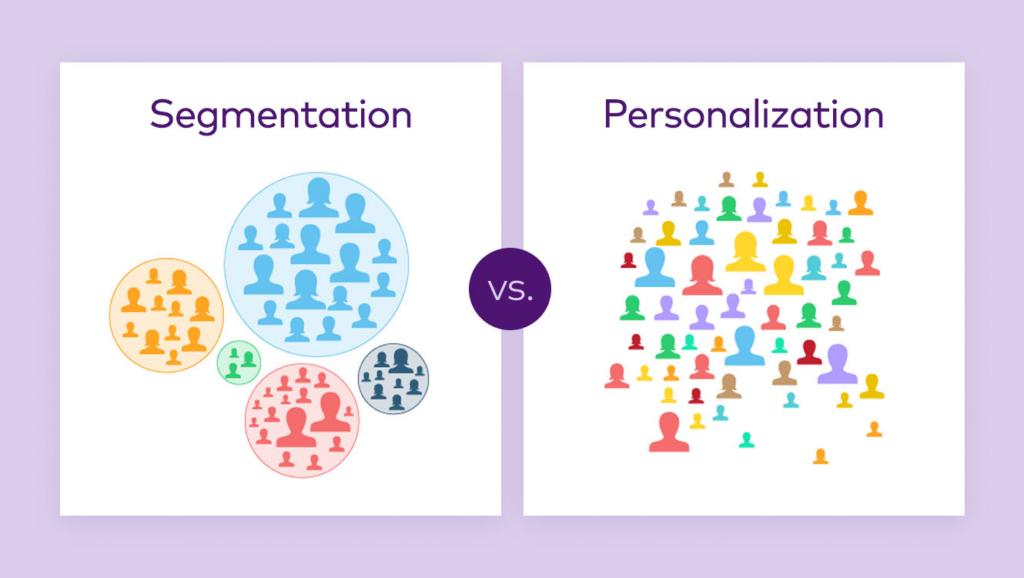
Modern marketing platforms heavily promote “personalization.”
In practice, most personalization is:
- inserting a first name
- referencing past behavior
- adjusting timing based on triggers
This is not true personalization.
It is structured approximation.
McKinsey highlights that while personalization can drive significant impact, many companies fail because they rely on shallow implementations rather than meaningful customer understanding.
The gap between perceived personalization and actual relevance is where disconnect begins.
The Personalization Gap
| What Brands Think | What Customers Feel |
|---|---|
| “We personalized this” | “This is automated” |
| “This is relevant” | “This is generic” |
| “This is helpful” | “This is intrusive” |
Over-Automation Creates Signal Loss. As systems scale, they generate more data — but paradoxically, less clarity. Why? Because automation prioritizes signals that are easy to capture:
- clicks
- opens
- page visits
But these signals are not always meaningful indicators of intent. For example:
- an email open doesn’t equal interest
- a click doesn’t equal consideration
- time on page doesn’t equal understanding
When systems optimize around incomplete signals, they reinforce incorrect assumptions — at scale.
Signal vs Intent
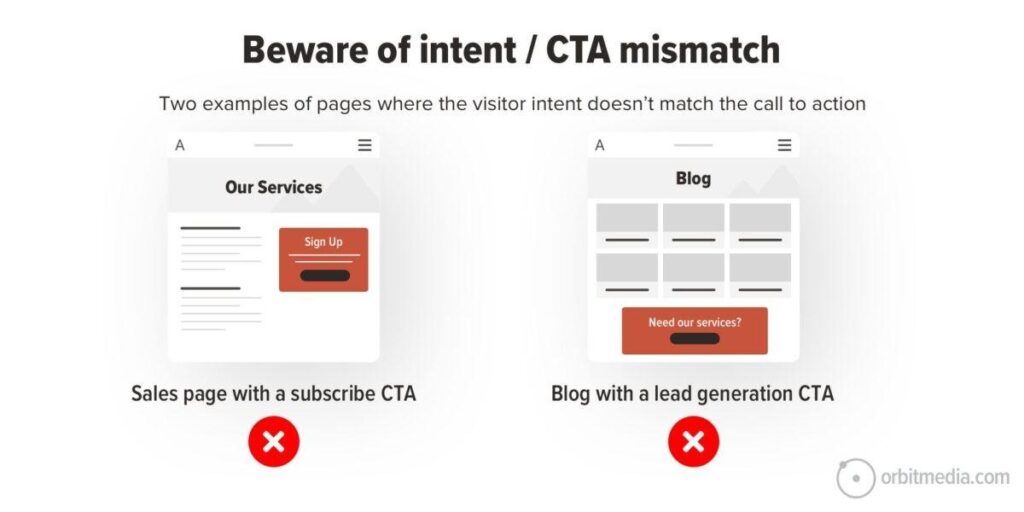
| Observed Signal | Actual Meaning (Possible) |
|---|---|
| Click | Curiosity, not intent |
| Open | Visibility, not engagement |
| Scroll | Passive consumption |
Individually, small inaccuracies in interpretation seem harmless.
But at scale, they compound:
- slightly wrong segmentation
- slightly irrelevant messaging
- slightly mistimed communication
Each interaction becomes marginally less aligned with the user.
Over time, this creates a subtle but powerful shift:
The brand feels present — but not connected.
This is not visible in dashboards immediately. Metrics may remain stable for a period, masking the underlying erosion of trust and relevance.
Why Teams Don’t Notice It Early
Over-automation is difficult to detect because:
- Short-term metrics still look good
- campaigns are delivered
- engagement exists
- conversions still happen
- Systems appear to be working
- flows are active
- data is processed
- reports are generated
- Decline is gradual, not sudden
By the time the disconnect becomes visible (declining retention, lower lifetime value, weaker brand affinity), the system has already been reinforcing the problem for months.
What High-Performing Teams Do Differently
They don’t remove automation.
They reframe its role.
Instead of using automation to replace human understanding, they use it to support it.
This means:
- combining quantitative signals with qualitative insights
- validating automated assumptions against real behavior
- limiting automation in high-context interactions
- designing systems that adapt — not just execute
The Shift: From Automation to Orchestration
Low-maturity approach: automate everything possible
High-maturity approach: orchestrate when, where, and how automation is applied
Automation Maturity Model
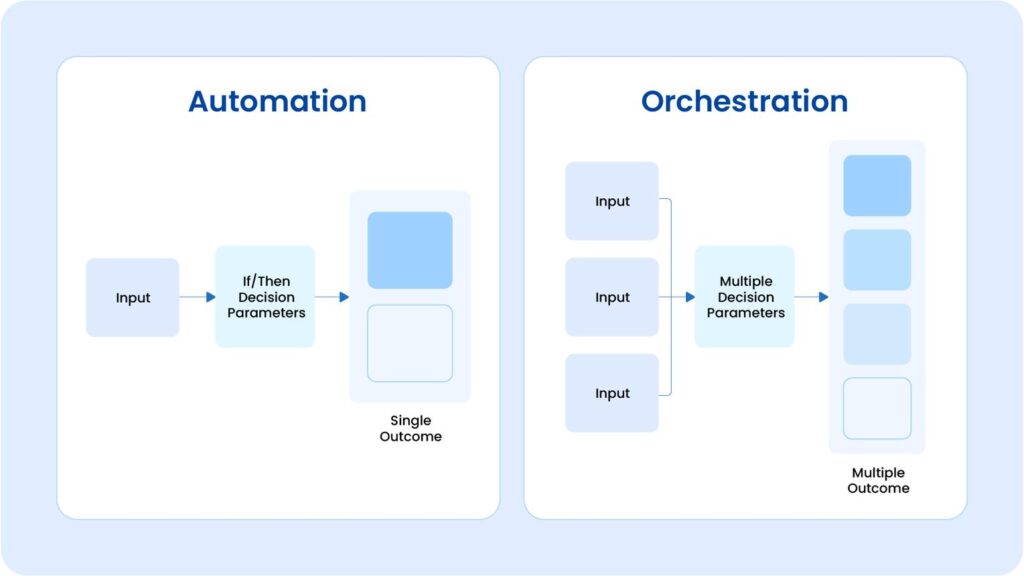
| Level | Approach |
|---|---|
| Basic | Rule-based automation |
| Intermediate | Data-driven automation |
| Advanced | Context-aware orchestration |
Conclusion: Efficiency Without Understanding Is Fragile
Automation is not the problem.
Blind automation is.
Systems that prioritize efficiency without maintaining connection inevitably drift away from the people they are meant to serve. And while this drift is slow, it is cumulative — and difficult to reverse once it reaches scale.
The goal is not to reduce automation.
It is to ensure that automation does not replace understanding.
Why This Matters — And Where We Come In
At ScaleTogether, we don’t just build automated systems. We design connected systems:
- where data reflects real behavior
- where automation is applied with context
- where customer signals are interpreted — not just processed
Because scaling communication is easy.
Scaling relevance is not.
If your marketing feels efficient but less effective —
if your systems run smoothly but engagement feels shallow —
you may not have an execution problem. You may have a disconnect problem. And that’s exactly what we solve.