


Why Winning Ads Break the Moment You Try to Grow Them
The Pattern Everyone Sees — But Misunderstands
Every performance team has seen this pattern, and it’s almost always explained incorrectly.
A campaign launches. Early results look strong — high CTR, efficient CPA, solid conversion rates. The numbers create confidence. Budget increases follow almost immediately. And then, within days or weeks, the system starts to slip.
Performance doesn’t just decline — it becomes unstable. CPA rises unevenly, conversion rates fluctuate, and previously “winning” creatives stop delivering consistent results. Teams respond the only way they know how: they replace creatives, tweak copy, test new hooks.
Sometimes that helps. Often it doesn’t.
The problem is not that the creative “stopped working.”
The problem is that you changed the environment it was working in.
Creative Doesn’t Scale — Distribution Conditions Do
A high-performing ad is not universally effective. It performs well under specific conditions:
- a dense cluster of high-intent users
- low exposure frequency
- strong algorithmic confidence
At small budgets, platforms like Meta and Google concentrate delivery on users most likely to convert. This creates an illusion: it looks like the creative is doing the work, but in reality, targeting precision is doing half of it.
Once you scale, that precision drops.
What Actually Happens When You Scale
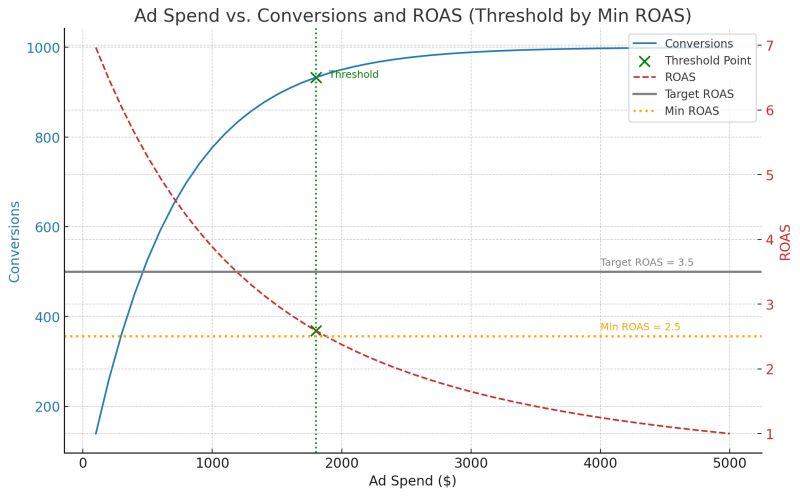
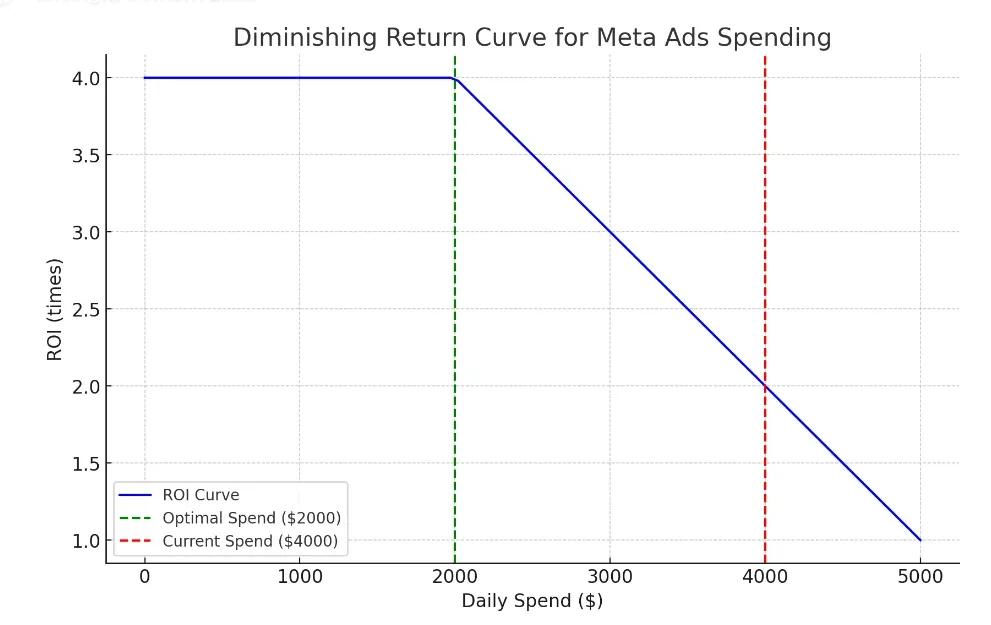
Instead of linear growth, performance follows a curve:
| Phase | What You See | What’s Actually Happening |
|---|---|---|
| Launch | Strong results | High-intent audience concentration |
| Early scaling | Stable performance | Algorithm still in control |
| Expansion | Fluctuations | Audience dilution begins |
| Saturation | Rapid decline | Frequency + low-intent users |
Scaling doesn’t amplify performance. It exposes the limits of your initial conditions.
Audience Expansion: The Quiet Performance Killer
When budgets grow, platforms are forced to move beyond your best users. This isn’t optional — it’s how scaling works.
The moment your campaign leaves the “high-intent pocket,” conversion probability drops. Not because your message changed, but because the people seeing it did.
Google explicitly states that automated bidding systems rely on historical signals and may perform differently when entering new auctions or audience segments. That’s a polite way of saying “performance becomes less predictable as reach expands”.
| Audience Layer | Conversion Behavior |
|---|---|
| High-intent users | Fast, predictable |
| Mid-intent users | Slower, variable |
| Low-intent users | Rare, inconsistent |
Scaling forces you down this ladder. And creatives that worked at the top rarely survive at the bottom without adaptation.
Frequency: The Point Where Attention Turns Against You
There is a moment when repetition stops helping and starts hurting.
Media research consistently shows that ad effectiveness declines after repeated exposure. While exact thresholds vary, the principle is stable: more impressions ≠ more results.
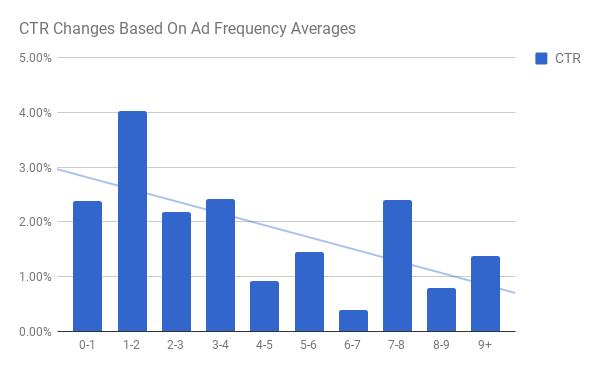
| Exposure Level | Effect on User Behavior |
|---|---|
| 1–3 | High engagement |
| 4–6 | Neutral impact |
| 7+ | Declining attention |
| 10+ | Active avoidance |
At scale, frequency doesn’t distribute evenly. Some users see your ad far too often, accelerating fatigue faster than averages suggest.
The Algorithm Doesn’t Break — It Relearns
Scaling disrupts stability not because platforms fail, but because they start exploring again.
Meta openly describes the “learning phase,” where performance fluctuates as the system recalibrates:
https://www.facebook.com/business/help/112167992830700
What matters is this:
- stable campaigns = predictable delivery
- scaled campaigns = exploratory delivery
Exploration introduces volatility.
Volatility looks like failure — but it’s actually system adaptation.
Why Most Teams React Wrong
When performance drops, teams usually do three things:
- Kill the creative
- Launch new variations
- Increase testing volume
This creates activity — but not necessarily progress.
Because if the issue is:
- audience mismatch
- frequency saturation
- unstable delivery
…then new creatives are just entering the same broken environment.
| What Teams Think | What’s Actually Happening |
|---|---|
| “Creative burned out” | Audience expanded |
| “Hook stopped working” | Frequency too high |
| “Need more creatives” | Delivery system unstable |
The Most Underrated Variable: Speed of Scaling
It’s not just how much you scale.
It’s how fast you scale.
Meta recommends gradual budget increases to maintain stability:
https://www.facebook.com/business/help/316478108955072
Because sudden changes force the system to reset.
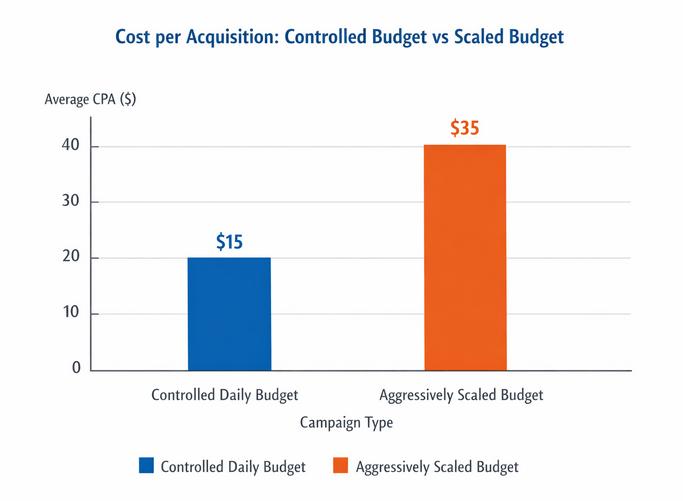
| Scaling Approach | Outcome |
|---|---|
| Gradual (+20%) | Stable optimization |
| Aggressive (x2 fast) | Performance instability |
What Actually Works (And Almost Nobody Does)
Stability at scale doesn’t come from “better ads.”
It comes from better systems:
- controlled audience expansion
- frequency monitoring at segment level
- slower budget velocity
- structurally different creatives (not cosmetic variations)
- continuous recalibration, not reactive fixes
The shift is subtle but critical:
👉 from “find a winning ad”
👉 to “manage a dynamic system”
Conclusion: The Real Problem Isn’t Creative — It’s Control
Creatives don’t fail because they lose power.
They fail because they are pushed into conditions they weren’t built for.
Scaling is not growth in a straight line.
It is a transition into a different system — with different rules, different users, and different dynamics.
And if you don’t control those dynamics, performance will always feel unstable, no matter how strong your creative is.
Why This Matters — And Why Teams Come to ScaleTogether
Most teams try to fix scaling problems at the surface level — more creatives, more tests, more iterations.
We work differently.
At ScaleTogether, we analyze the full system behind performance:
- how your audience actually expands
- where efficiency is lost
- how algorithms respond to your scaling decisions
- and how to build structures that remain stable as you grow
Because real growth is not about finding what works once.
It’s about building something that keeps working under pressure.
👉 If your campaigns perform at small scale but break when you grow —
you don’t have a creative problem.
You have a scaling system problem.
And that’s exactly what we solve.