

ScaleTogether partnered with a creative digital agency (name withheld under NDA) to improve client retention and recurring revenue through a structured CRM optimization and automated lifecycle marketing program.
The initiative delivered a 367% increase in repeat clients and a 251% increase in total sales, while maintaining a 73% email engagement rate — demonstrating that controlled retention programs can outperform acquisition-focused growth.
Challenge
Despite consistent lead flow, the client faced declining repeat business and short project life cycles.
Key issues included:
- Low post-project engagement — most clients did not return after the initial purchase.
- Lack of structured reactivation workflows.
- Manual, inconsistent follow-ups across sales and account teams.
- Minimal visibility into retention performance.
As a result, revenue growth depended almost entirely on new leads — an inefficient and costly model.
Objectives
The project aimed to:
- Increase the number of repeat clients through structured re-engagement.
- Raise sales revenue by improving deal size and client lifetime value (LTV).
- Establish automated, measurable CRM processes for retention.
- Achieve measurable improvement in email engagement to validate client interest and timing.
Approach
ScaleTogether implemented a three-layer retention framework:
- Data & Segmentation — ensuring accuracy and behavioral visibility.
- Lifecycle Automation — building timely, personalized re-engagement flows.
- Value Expansion — using tailored offers and consistent account follow-up.
This framework ensured that every contact was addressed according to their lifecycle stage, engagement history, and potential value.
Execution
a. Data Foundation & Segmentation
- Audited and cleaned the CRM, consolidating 1,213 valid contacts.
- Introduced structured lifecycle segments: New, Active, At-Risk (30–60 days), Dormant (60–180 days), and Loyal (2+ projects).
- Tagged contacts with behavioral fields (project date, LTV, engagement frequency).
b. Automated Lifecycle Journeys
- Dormant reactivation flow: 5-email sequence offering a free audit, success story, and a limited-time package incentive.
- Post-delivery flow: automated satisfaction survey followed by an upsell suggestion within 7–10 days.
- Milestone triggers: 3/6/12-month personalized follow-ups referencing previous results and next-step recommendations.
These flows reduced manual outreach and ensured consistent, personalized contact at optimal engagement points.
c. Offer Architecture & Sales Enablement
- Developed three predefined offer bundles (Refresh, Growth, Retainer) aligned with common client needs.
- Created automation rules that prompt account managers to present upgrade offers during follow-ups.
- Enabled CRM reminders and integrated hand-over templates between Sales and Account teams.
d. Engagement & Experimentation
- Ran controlled A/B tests on subject lines, CTAs, and offer framing.
- Found that a “Free Audit” offer outperformed generic discounts in generating appointments (+32% conversion).
- Maintained open rate at 73% — confirming high message relevance.
Results & Impact
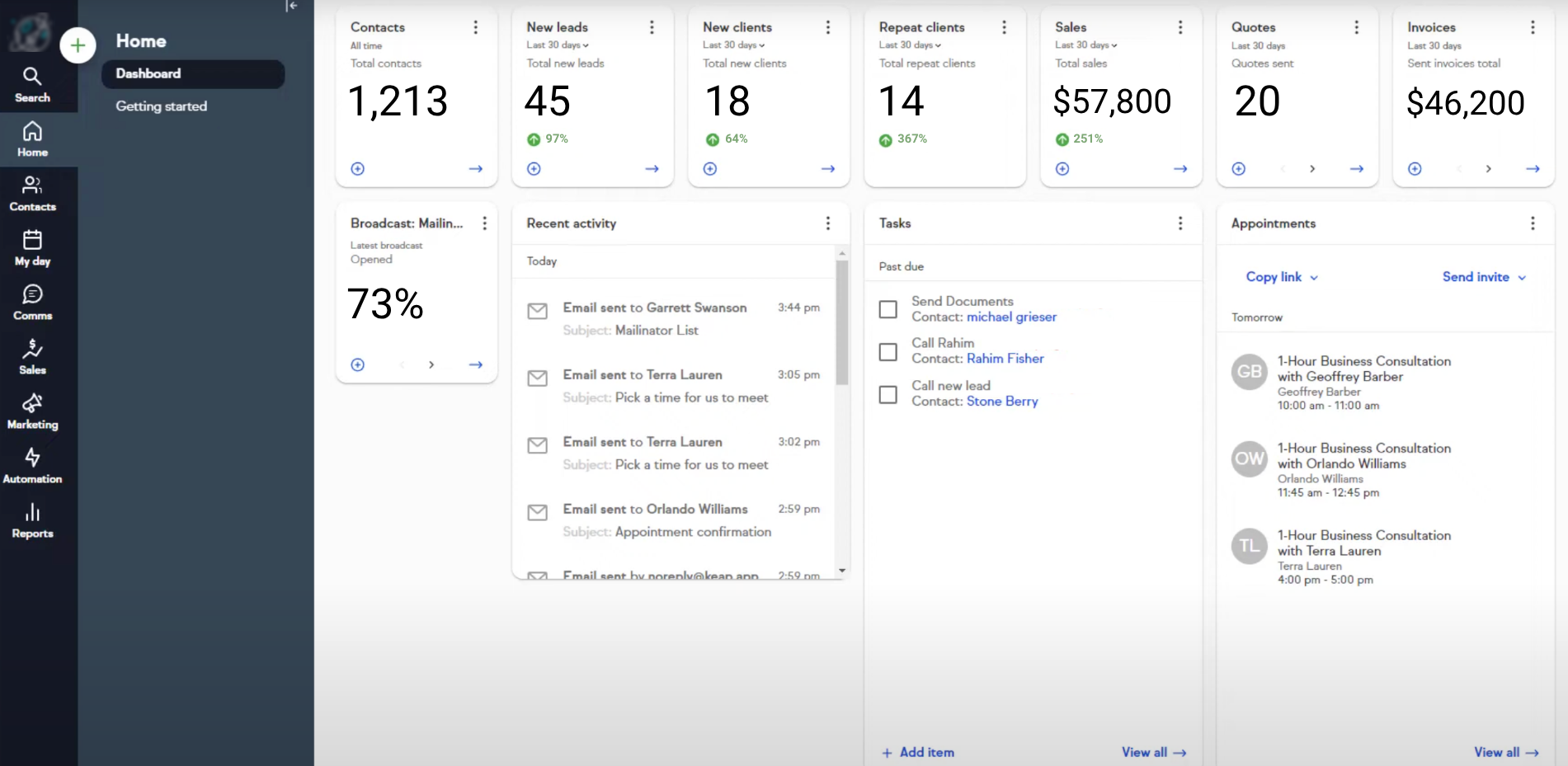
| KPI | Before | After | Change |
|---|---|---|---|
| Repeat Clients | 3 | 14 | +367% |
| Total Sales | $16,500 | $57,800 | +251% |
| Invoices Sent | $18,900 | $46,200 | +145% |
| New Clients | 11 | 18 | +64% |
| Email Open Rate | 54% | 73% | +19 pp |
| Average Reactivation Time | 35 days | 12 days | ↓ 66% |
Key observations:
- 62% of total sales came from reactivated clients — confirming the ROI of retention.
- Average deal size for repeat clients doubled from ~$950 to ~$1,900.
- Manual follow-ups were reduced to zero through automation.
- Team gained daily visibility into retention metrics via a live dashboard.
Key Success Factors
- Data discipline: Clean CRM segmentation allowed laser-targeted outreach.
- Automation at scale: Eliminated follow-up gaps while keeping communication personal.
- Value-driven messaging: Offers were contextual, not generic promotions.
- Cross-team alignment: Clear process between Sales and Account Management ensured continuity.
- Rapid testing loop: Continuous A/B iterations refined timing and messaging for maximum conversion.
Strategic Outlook
Building on these results, ScaleTogether recommended the following next steps:
- Introduce predictive churn scoring to identify at-risk clients before inactivity.
- Establish tiered retention packages (subscription-based) for top LTV segments.
- Expand referral incentive programs using automated tracking.
- Launch LTV dashboarding to optimize spend between acquisition and retention channels.
Conclusion
The ScaleTogether retention initiative transformed an underutilized contact base into a predictable, recurring revenue stream.
By combining clean data, behavioral automation, and targeted offers, the client achieved a 367% growth in repeat business and a 251% increase in total sales in just one month — establishing a scalable foundation for sustainable revenue growth.