


Every marketer knows the feeling.
You’ve built what looks like a perfect campaign — sharp creative, precise targeting, strong CPC performance — but when the quarterly report arrives, the numbers don’t add up.
The ads ran.
But they didn’t work.
The problem isn’t incompetence — it’s timing and structure. Most campaigns fail not because of poor execution, but because optimization starts too late, happens too rarely, or relies on incomplete data.
Let’s break that down with real-world evidence.
The Hard Truth About Advertising ROI
According to Nielsen’s Annual Marketing Report (2024), while 85% of marketers believe they can measure ROI, only 32% actually measure it across all channels. That means two-thirds of marketing budgets still run on fragmented data and isolated KPIs.
Nielsen’s meta-analysis of hundreds of campaigns further shows that ad effectiveness follows a curve, not a line. Beyond a certain threshold, every additional dollar yields less return — the classic law of diminishing ROI.
Independent research from FirstPageSage (2024) confirms this: the average Return on Ad Spend (ROAS) across digital channels hovers at 1.55x — meaning that for every $1 spent, the average campaign earns only $1.55 back. That’s barely above breakeven when you account for overhead, creative, and sales costs.
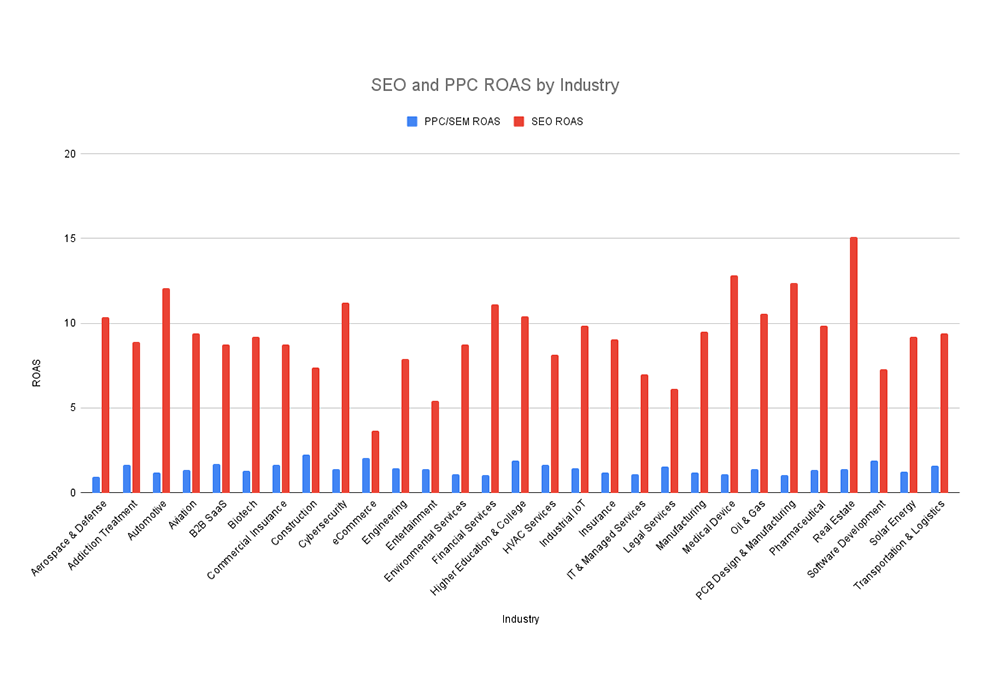
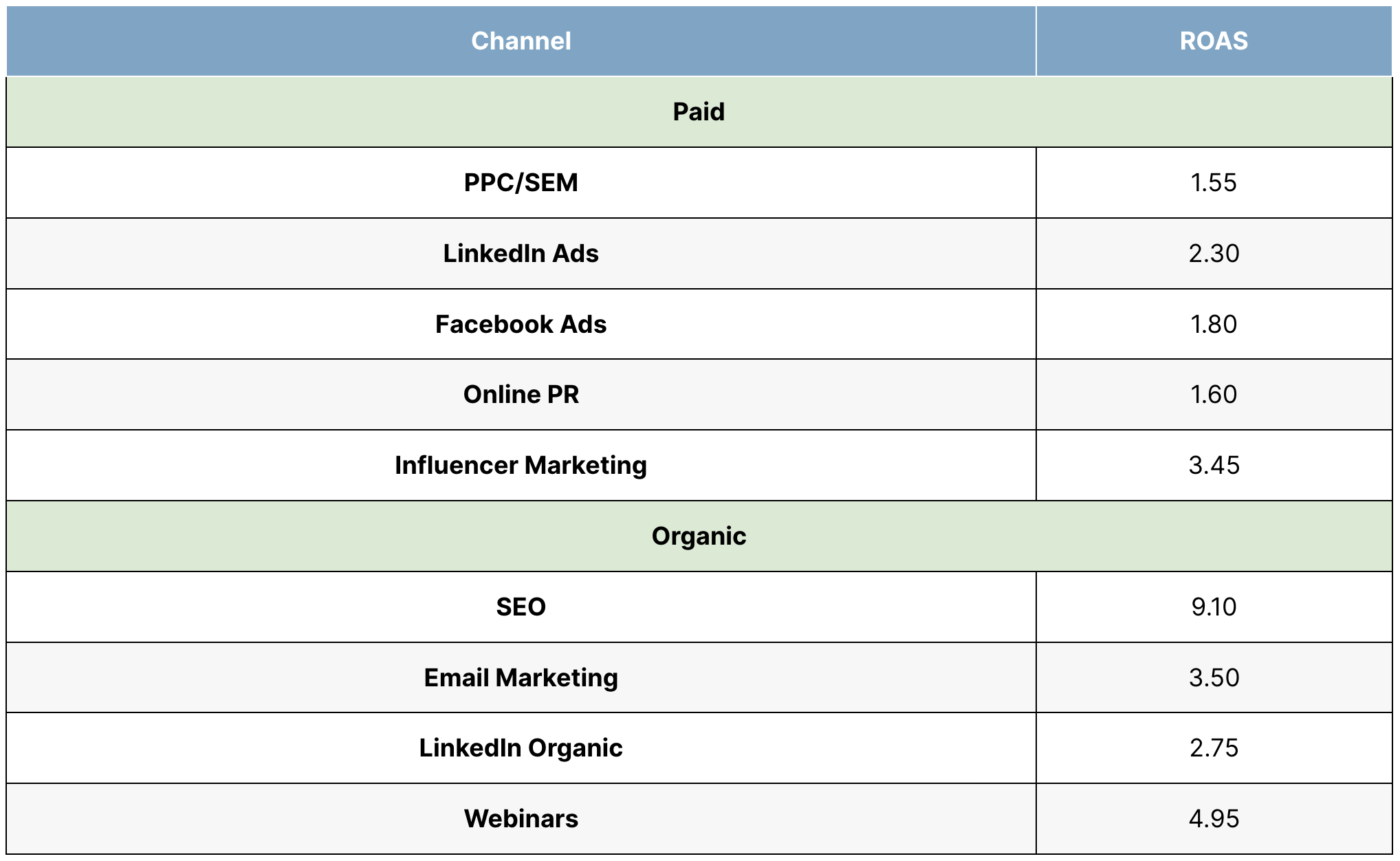
In contrast, Salesforce’s Marketing ROI Benchmark (2024) classifies a 5:1 ratio as “excellent” — but few digital campaigns ever reach it consistently.
So if the majority of campaigns fall below this benchmark, the question isn’t how much we spend — it’s how intelligently we optimize.
The Hidden Leaks Draining Digital Ad Budgets
After auditing more than 40 digital ad accounts between 2023 and 2024, ScaleTogether identified five recurring inefficiencies that explain why most budgets underperform — and why even high-performing campaigns often plateau.
1️⃣ Audience Overlap and Wasted Reach
Across Meta, Google, TikTok, and LinkedIn, up to 20–25% of impressions are duplicated when platforms don’t share data. You’re essentially paying to show the same person the same message across multiple channels.
🧩 Fix: Integrate cross-channel audience management and deduplicate via CRM or CDP tools (HubSpot, Segment, or Meta’s AEM).
2️⃣ Vanity Metrics Masquerading as KPIs
A 5% CTR looks great — until you realize those clicks came from unqualified traffic. According to Nielsen’s Marketing ROI Blueprint (2025), brands that optimized for business-value metrics (like Cost per Qualified Lead or Lifetime Value) saw 38% higher ROI than those optimizing for CPC or CTR.
3️⃣ Fragmented Tracking Ecosystems
As cookies disappear and privacy rules expand, disconnected tracking systems become marketing’s biggest blind spot.
Facebook Pixel, Google Tag Manager, and CRM data often live in isolation — creating what Salesforce calls “data silos that kill optimization.”
When a retail brand integrated HubSpot + GA4 + Whatagraph, attribution accuracy improved by 42%, and CPA dropped by 27% within two months.
4️⃣ Creative Fatigue and Declining Engagement
Even the best-performing ad decays with time. Meta’s internal data suggests engagement starts dropping after three to four weeks of high-frequency delivery.
🧩 Fix: Automate creative rotation and refresh cycles. In one campaign, predictive creative testing increased engagement by 54% after introducing AI-driven asset refresh (via Hootsuite AI).
5️⃣ The Post-Click Black Hole
The average landing page conversion rate across industries is 2.9% (WordStream, 2024).
Three-second load delays reduce conversions by 32%; poor mobile UX by 42%.
🧩 Fix: Treat landing pages as part of the ad system, not as an afterthought. When a SaaS client implemented dynamic landing personalization, lead-to-demo conversion rose from 2.9% → 6.8% in just six weeks.
The Economics of Optimization: Data-Backed Results
Optimization is not a switch you flip — it’s a closed-loop system.
At ScaleTogether, we model it across five phases:
| Stage | Focus | Measured Impact |
|---|---|---|
| 1. Data Collection | Unified metrics across all ad, CRM, and analytics systems | +100% visibility on spend vs. outcomes |
| 2. Performance Diagnostics | Identify leaks, overlaps, and inefficiencies | 15–25% budget waste reduction (avg.) |
| 3. Predictive Modeling | Forecast ROI drops and trend inflection points | 78–82% forecast accuracy |
| 4. Dynamic Optimization | Automated budget shifts, bid adjustments, creative refresh | +1.7× average return |
| 5. Feedback Loop | Continuous learning from campaign data | Compounding ROI over time |
This system transforms advertising from a static expense into a living feedback organism — capable of learning, adapting, and self-optimizing in real time.
The Psychological Barrier to Optimization
Ironically, the biggest resistance to optimization is emotional, not technical.
Creative teams often see “data” as a constraint, while analysts view creativity as chaos. But real performance emerges when those worlds merge.
As Harvard Business Review notes, companies with strong marketing-analytics integration outperform competitors by up to 85% in brand lift and revenue growth.
Optimization isn’t about cutting creativity — it’s about amplifying it with precision.
How to Rethink Your Ad Budget — Practically
If you want your campaigns to work, not just run, start here:
- Audit Before You Scale
Fix tracking gaps, duplicated audiences, and outdated creatives before increasing spend. - Unify Your Data Layer
Connect all ad accounts, analytics, and CRM systems. If you can’t see it — you can’t improve it. - Automate the Routine
Use automation for reporting, bid adjustments, and creative refreshes — free your team for strategy. - Define Dynamic KPIs
Blend cost metrics (CPC, CPM) with revenue and retention outcomes (CAC, LTV). - Think Beyond the Click
Optimize the full funnel: landing pages, onboarding, nurturing, retention. Every step compounds ROI.
The Future: Intelligent Advertising Systems
In 2025 and beyond, optimization isn’t optional — it’s survival.
AI-driven ad systems, privacy-first attribution, and interoperable analytics platforms are setting a new standard: every dollar must prove its value in real time.
The future of marketing isn’t about spending more.
It’s about spending smarter.
When you master optimization, you don’t just save your budget — you build a self-evolving growth engine.